Floor tiles in a Singapore home
Porcelain, homogeneous and ceramic tiles, and marble-look porcelain: water and wear, hard underfoot.
Ben & Belle are AI · their notes are written by our team from the sources on this page
Ben Tap the old tiles before anyone quotes an overlay. A hollow one under a new tile is trouble.
Belle Big tiles, few joints, a calmer floor. Ask for the shade number on the box.
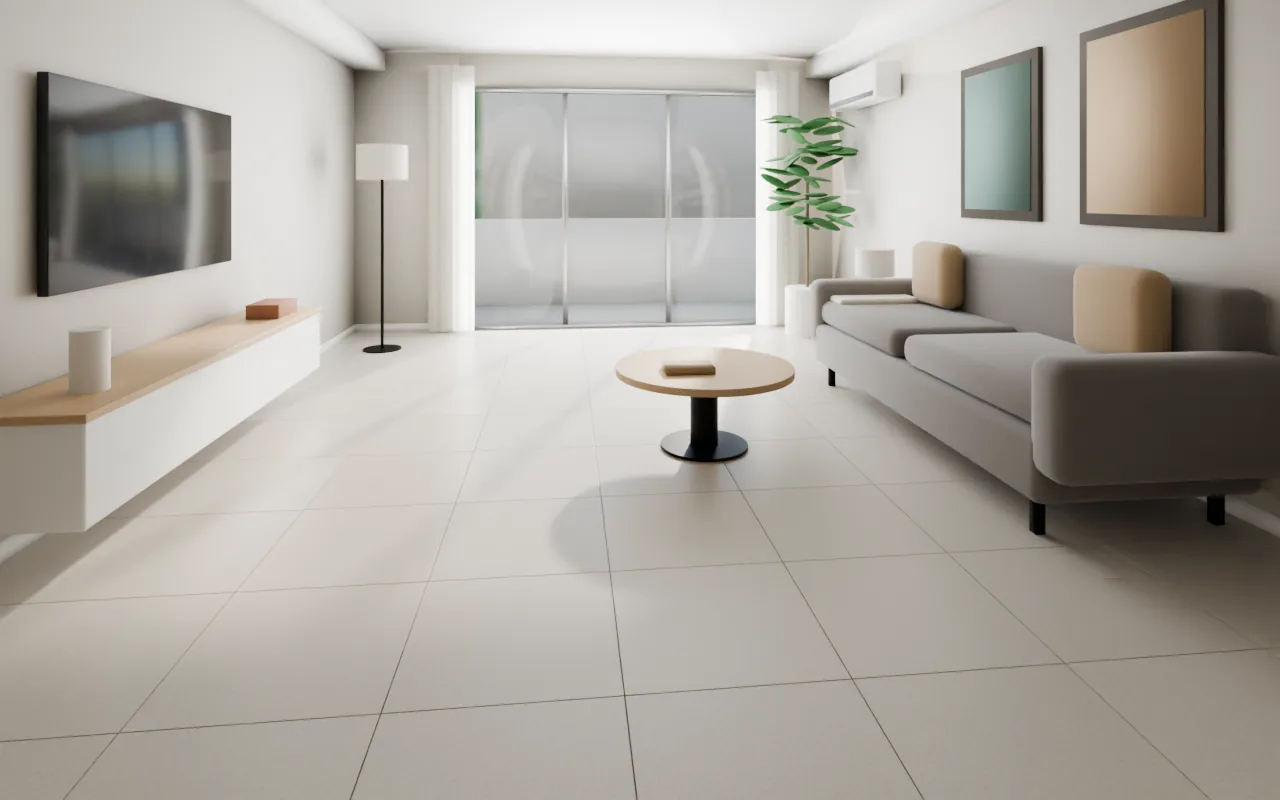
3D render
A typical warm grey homogeneous tile, not a specific product
Same room, same light, same camera. Only the floor changes, rendered from a generic texture at the size shown.
In one minute
- Porcelain absorbs 0.5% or less; the grout is the weak point.
- Replacing tiles means hacking and an HDB permit; a thin adhesive overlay may need none.
- In bathrooms, pick a slip rating for wet floors and a membrane underneath.
What it is
- TCNA defines porcelain tile as impervious, with water absorption of 0.5% or less under the ASTM C373 test.1
- BCA says porcelain tiles are hardier, less porous and more resistant to moisture and stains than ceramic tiles.2
- Homogeneous tiles carry their colour and texture through the whole tile, so chips and scratches show less.3
- Ragno says its marble-effect porcelain doesn't need regular polishing, unlike natural marble.4
- The Natural Stone Institute says lemon, vinegar and other acids may dull or etch marble-type stones.5
Where it works
- Living areas, kitchens and bathrooms, with the right slip rating.
- BCA says the slip resistance class should be set by how a space is used, referring to SS 485:2011.2
- Qanvast suggests anti-slip tiles rated R10 to R12 for bathroom floors, especially in the shower.3
- TCNA says DCOF figures help compare surfaces but don't predict whether a person will slip.6
HDB's rules for it
- Replacing floor finishes (ceramic, homogeneous, terrazzo, marble, parquet or timber, other tiles) needs an HDB permit.7
- Laying floor finishes over existing finishes using adhesive only needs no HDB permit if there is only 1 layer of existing floor finishes including cement screed, the thickness including adhesive is 13mm or less, the floor trap isn't tampered with, and nothing seeps into the bedroom.7
- Removing floor finishes is restricted renovation: 9am to 5pm on weekdays only, not on Saturdays, Sundays, public holidays or the eves of New Year's Day, Chinese New Year, Deepavali, Hari Raya Puasa and Christmas Day.8
- Renovation contractors cannot take more than 3 consecutive days to remove floor finishes.8
- Pre-packed waterproofing screed and a waterproofing membrane must be used in bathrooms before laying new floor finishes.8
- Toilet floor and wall finishes provided by HDB or the developer must not be replaced for 3 years from the completion date of the block.8
- In a newly built BTO flat, where toilet finishes can't be removed for 3 years, you can overlay the original toilet tiles with tiles of your choice instead of hacking them away.9
- HDB gives new flat owners a 5-year warranty on ceiling leakages and external seepage, which ceases if floor tiles are changed or the waterproofing system is tampered with.10
- In a household shelter, vinyl or linoleum is allowed; floor tiles must be bonded to wet cement mortar, and tiles laid with adhesive or a second layer of tiles are not permitted.11
Living with it
Homogeneous tiles
Warm grey · 600 × 600 mm
Marble-look porcelain
Polished · 1200 × 600 mm
Laying it
- A tile supplier quoted by Home & Decor warned that overlaid tiles might pop up over time if they cover too large an area.21
- BCA's acceptance check: no hollow sound when tiles are tapped with a tapping rod.2
- BCA says the step between two tiles (lippage) should be no more than 0.5 mm.2
- BCA says a waterproofing membrane should always be installed in wet areas to stop water reaching neighbouring areas and the floor below.2
What it costs
Our price band · supplied and laid
S$85–190 a sqm · S$7.90–17.65 a sq ft
| HDB 3-room · 60 sqm | S$5,100 to S$11,400 |
|---|---|
| HDB 4-room · 85 sqm | S$7,225 to S$16,150 |
| HDB 5-room · 100 sqm | S$8,500 to S$19,000 |
| HDB Executive · 120 sqm | S$10,200 to S$22,800 |
| Condo · 90 sqm | S$7,650 to S$17,100 |
| Landed · 180 sqm | S$15,300 to S$34,200 |
Set Sep 2026.
Supplied and laid, with standard installation. Major levelling or screeding, removing and disposing of the old floor, new skirting, special transition profiles, door trimming and other remedial work are normally extra, priced after a site inspection. Some products cost more. GST is added or included as the final quotation states.
Our price bands are set with Monli, our affiliate partner, and checked against published Singapore guides.
Monli is our affiliate partner, and we earn a commission when you buy there.
Ask before you pay
- What's its water absorption, and its slip rating for the room it's going in?
- Are the edges rectified?
- Is every box from the same shade and caliber?
- Cement or epoxy grout?
- How many spare tiles should I keep?
Tones to try
Homogeneous tiles
Warm grey · 600 × 600 mm
- Cream matte porcelain
- Light grey porcelain, large format
- Warm grey textured porcelain
- Terrazzo-look porcelain
3D render
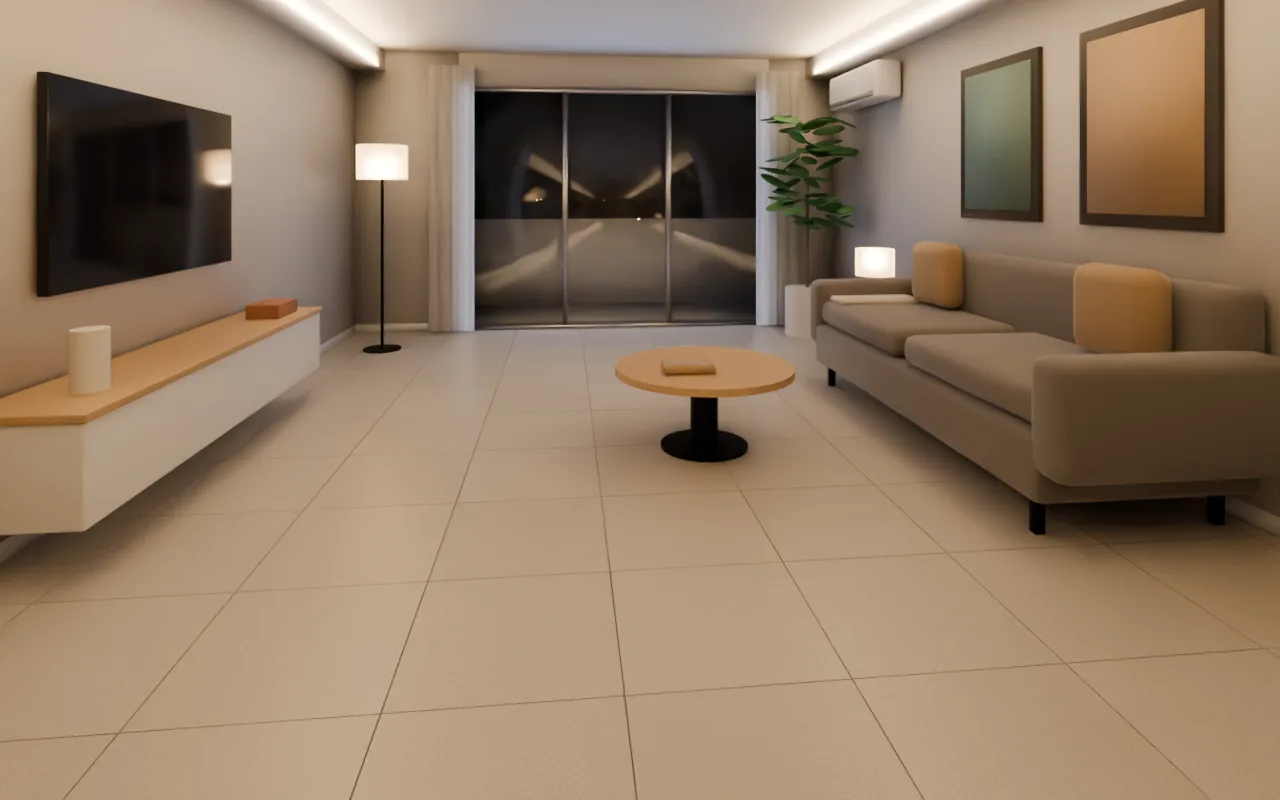
3D render
A typical warm grey homogeneous tile, not a specific product
See it in the room: Homogeneous tilesMarble-look porcelain
Polished · 1200 × 600 mm
- Light grey porcelain, large format
- Cream matte porcelain
- Terrazzo-look porcelain
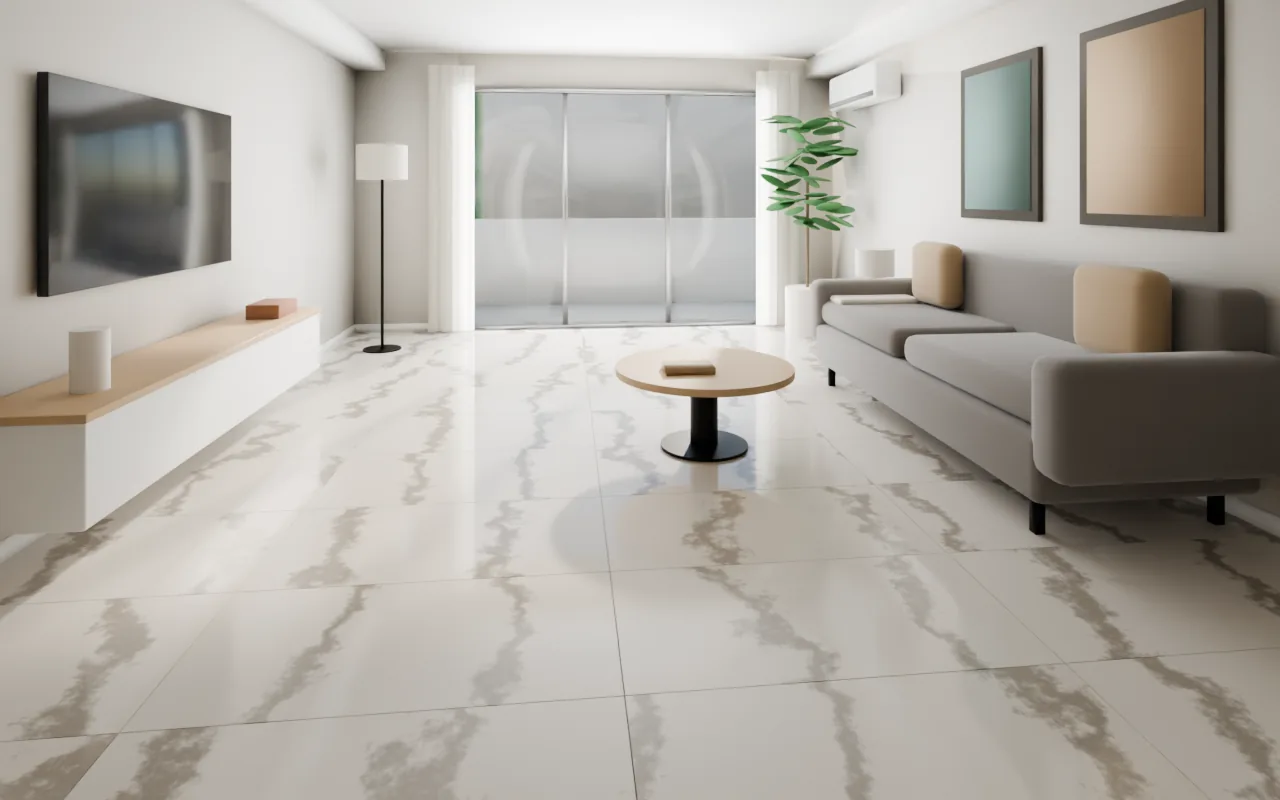
3D render
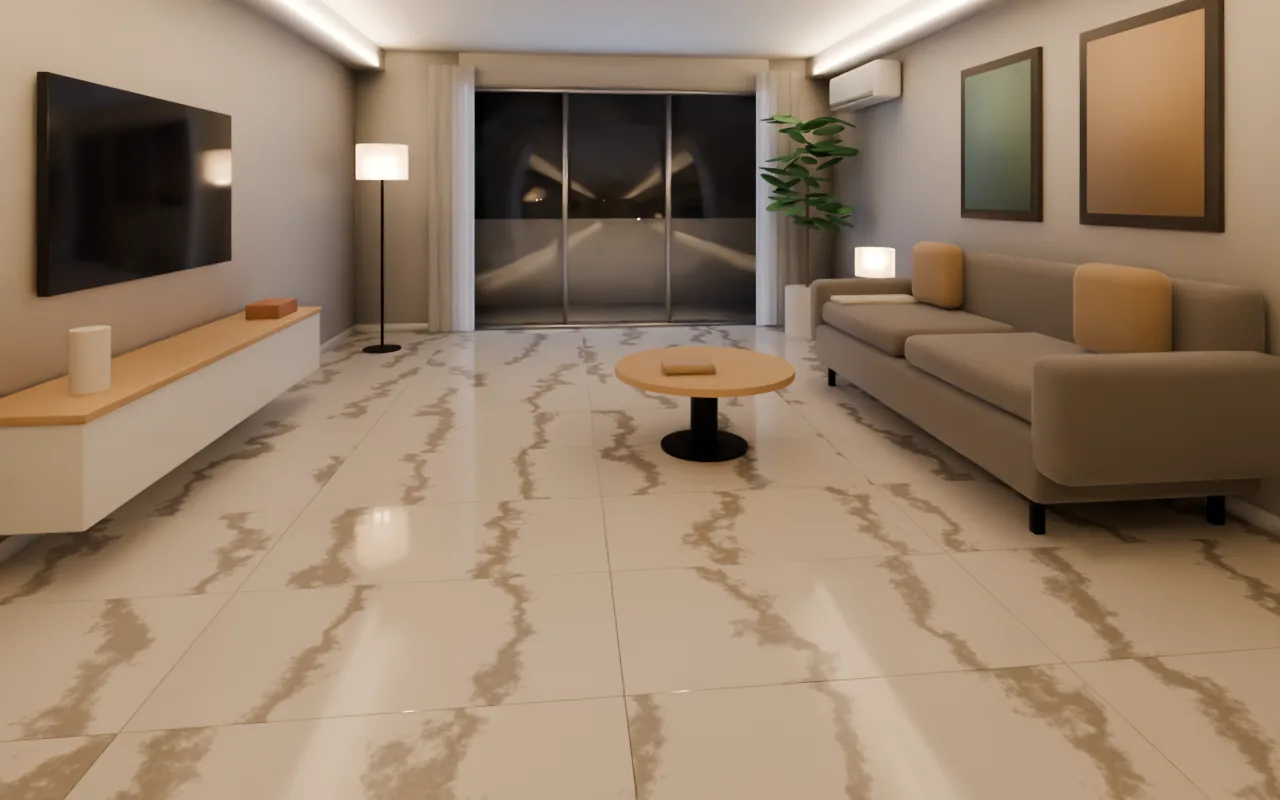
3D render
A typical polished marble-look porcelain, not a specific product
See it in the room: Marble-look porcelainSources
- TCNA (Tile Council of North America), Porcelain tile certification, 9 Sep 2025
- BCA, Good Industry Practices: Ceramic Tiling (3rd edition), 2018
- Qanvast, A comprehensive guide to tiles, 29 Jul 2025
- Ragno (Marazzi Group), Marble-effect tiles, undated, checked 30 Sep 2026
- Natural Stone Institute, Caring for your stone, undated, checked 30 Sep 2026
- TCNA, Dynamic coefficient of friction: frequently asked questions, 1 Aug 2025
- HDB, Building works guidelines, checked 30 Sep 2026
- HDB, Renovation: important information, checked 30 Sep 2026
- MyNiceHome (HDB), How to renovate your HDB flat, updated 24 Jun 2026
- MyNiceHome (HDB), How to maintain your HDB flat, updated 17 Aug 2026
- SCDF, Permitted and not permitted works for household shelters, undated, checked 29 Sep 2026
- Florim, Porcelain tile: technical characteristics, sizes and thicknesses, undated, checked 30 Sep 2026
- HDB, Home care guide: floor finishes, undated, checked 1 Oct 2026
- Marazzi USA, Test results, undated, checked 30 Sep 2026
- Home & Decor, HDB flooring price: vinyl vs tile vs laminate vs parquet vs screed, 26 Feb 2023
- Qanvast, How to soundproof your home office, music studio or entertainment room, 22 Jul 2025
- Mapei, Flooring systems for sound reduction, 2025
- Laticrete, Everything you need to know about epoxy grout, 27 Jun 2025
- Marazzi USA, FAQs, undated, checked 30 Sep 2026
- TCNA, Tile: the natural choice (2025), 2025
- Home & Decor, Is it a good idea to overlay your floor tiles?, 16 Feb 2016